
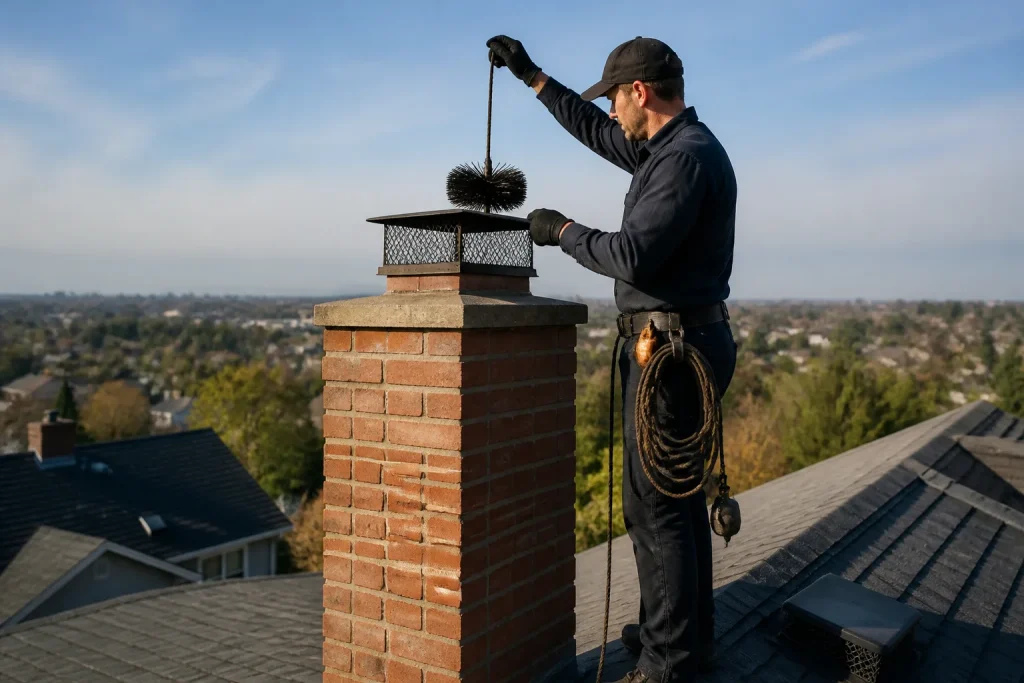
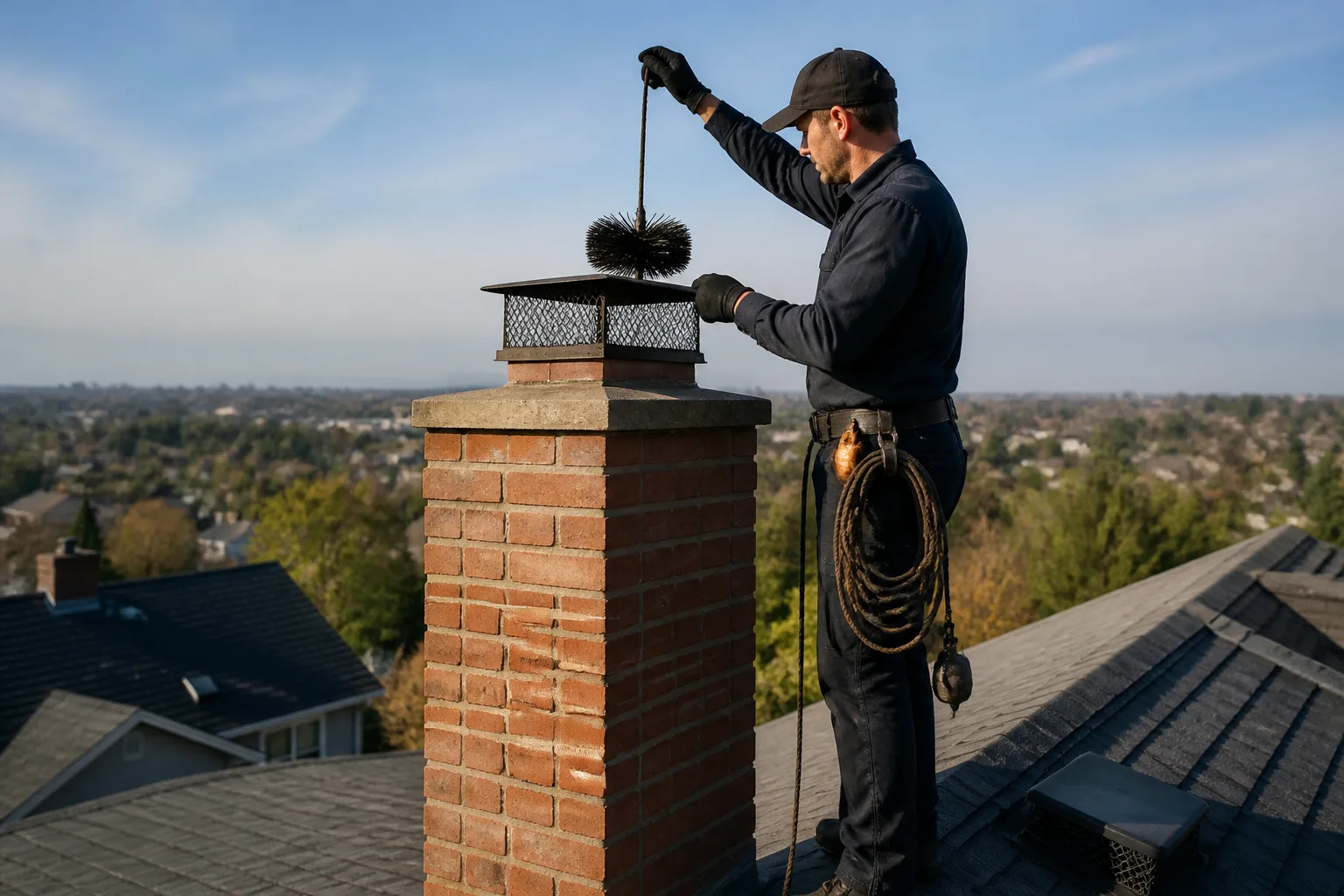
Famco Chimney Sweep in Fountain Valley: A Homeowner’s Guide
If a chimney technician’s report mentions your Famco cap needs replacement, the right follow-up question isn’t “how much?” It’s “what model and what size collar?” Cap mismatches are one of the most common sources of persistent draft problems after a service call, and they’re almost always a sizing or fit issue rather than a workmanship one. Understanding what’s actually on top of your chimney makes the next conversation with your sweep a lot more productive.
Key Takeaways
- Famco makes caps, termination covers, and venting components – not liners or flue interiors.
- The collar diameter and model number matter more than the price when a cap is replaced.
- Southern California sun and smog degrade plastic and coated components faster than most homeowners expect.
- A correctly fitted cap protects draft performance, not just the flue opening.
If you’d rather not climb up there with a tape measure, call (877) 792-7543. We answer 24/7. Fast dispatch from 7am to 7pm, Sunday through Friday.
What Does Famco Actually Make for a Chimney System?
Famco manufactures chimney caps, termination covers, and venting components – the parts that sit at the very top of a chimney system and at the ends of vent runs. They don’t make liners, crowns, or flue tile. That distinction matters, because homeowners sometimes hear “Famco” on an inspection report and assume it refers to the whole chimney assembly rather than the termination hardware.
Here’s where each Famco component sits in a typical Fountain Valley home:
- Chimney caps – the lid over the flue opening, usually with a screen or louvered side. It keeps rain, birds, and debris out while allowing exhaust to escape.
- Termination covers – the vented caps at the end of a Type B gas vent or direct-vent run. Common on gas fireplaces and furnace flues.
- Draft inducers and vent caps – components that help stabilize exhaust flow on certain appliance configurations.
Everything below the cap – the flue lining, the crown, the firebox – comes from a different manufacturer or trade. A DuraFlex liner, for example, is a completely separate system from the cap above it. When we look at a chimney in Fountain Valley, we’re evaluating each layer independently: what’s the cap doing, what’s the crown doing, what condition is the flue interior in. A new cap won’t fix a cracked flue, and a clean flue won’t stay clean if the cap is missing or damaged.
How Do You Tell If a Famco Cap Is Correctly Sized?
A correctly sized Famco cap fits the flue with a collar that matches the flue’s outside dimensions, sits level, and has intact screen mesh with no gaps larger than the mesh spec allows. If any of those three conditions fail, the cap isn’t doing its job – even if it looks fine from the ground.
Here’s what a sweep should check, and what you can ask about:
- Collar fit. The cap’s collar should slip over the flue tile or steel pipe with a snug but not forced fit. Too loose and exhaust can spill back around the collar. Too tight and the cap can crack the flue tile during installation.
- Clearance above the flue. Most caps need a specific minimum gap between the top of the flue and the underside of the cap lid for proper exhaust. A cap sitting too low restricts draft.
- Screen mesh condition. Mesh that’s torn, sagging, or corroded open lets birds and debris in and stops being a spark arrestor. In Fountain Valley, sun exposure breaks down the mesh faster than most people expect.
- Cap-to-crown seal. If the cap is anchored into the crown and the seal around the anchor points has failed, water gets into the crown through the fasteners. That’s a slow leak that shows up as efflorescence or spalling years later.
If a technician tells you the cap needs replacing, ask for the model number and the collar size. A sweep who can’t tell you either is guessing.
What Causes Famco Caps to Fail in Fountain Valley Homes?
Fountain Valley’s climate is hard on termination hardware in ways that aren’t always obvious. Three failure modes come up again and again:
- UV degradation. Long stretches of sun break down plastic and coated components. Mesh screens lose tensile strength and sag. Painted or powder-coated surfaces chalk and eventually fail at seams.
- Screen corrosion. Even inland, the air in the region carries enough moisture and airborne particulate that standard steel mesh rusts through. Stainless or heavier-gauge mesh lasts longer but isn’t what every builder installed.
- Cap-to-crown seal failure. The sealant around the cap’s feet or anchoring fasteners cracks with thermal cycling. Once water gets under the fasteners, the crown starts to spall from the inside out.
None of this is a Famco-specific problem – every brand ages the same way in this environment. What differs is how easily the replacement can be sized and fitted. That’s where the brand matters: a standard, well-documented product line makes it simpler for a sweep to identify the correct replacement and match the existing collar and clearance.
It’s worth saying plainly: a failed cap is rarely an emergency. If the crown is intact and the flue is sound, the cap can usually wait until the next scheduled service. The exception is when the cap has lost enough mesh or structural integrity that birds or debris are getting into the flue.
What Should You Ask Before Approving a Famco Cap Replacement?
Before you approve a Famco cap replacement, ask four specific questions: what model, what collar size, what installation method, and what happens to the crown seal. A sweep who can answer all four is doing the work correctly; one who can’t is guessing at the fit.
The conversation should sound like this:
- “What model?” A Famco cap model number tells you exactly what the replacement is and lets you look up the specs yourself if you want to.
- “What collar size, and how did you measure it?” The correct answer is a measurement taken from the actual flue, not from a guess based on the old cap.
- “How is it anchored, and will the anchor points be sealed?” Fastened caps need sealed anchor points. Otherwise the new cap leaks just like the old one did.
- “Is the crown sound enough to accept the new cap?” If the crown is cracked or spalling, replacing the cap without addressing the crown is a short-term fix.
We work with Famco, Gelco, and other recognized commercial-grade cap manufacturers because a standard, documented product line makes sizing and compatibility reliable. When we quote a replacement in Fountain Valley, we quote a specific model with a specific collar size, so there’s no ambiguity about what’s being installed.
Why Does Professional-Grade Termination Hardware Matter for Draft?
Termination hardware isn’t just a rain cover. It’s the last point where exhaust exits the system, and its geometry shapes how the flue drafts. A cap that’s too short restricts flow. A cap that’s too tall or oversized can cool the exhaust before it clears. Mesh that’s clogged with lint or soot creates back pressure that pushes smoke back into the room.
Professional-grade components like Famco and Gelco are specified by chimney professionals nationwide for a reason: they’re designed to predictable dimensions, so a sweep can match the cap to the flue rather than forcing a fit. Big-box caps often come in one or two sizes and get trimmed or shimmed to fit – which is exactly where draft problems begin.
The right termination assembly also plays a role in weather protection. It keeps out rain, stops birds, blocks sparks, and shields the crown from direct water intrusion. A clean chimney is the starting point; cap, crown, and liner condition determine whether it stays that way. If your liner is compromised rather than your cap, HeatShield resurfacing can restore a damaged flue interior without the cost of full liner replacement. Different problem, different fix – but both require the same careful assessment at the top and bottom of the system.
When Should You Call a Pro?
Call a pro if the cap is missing, badly damaged, or letting debris into the flue; if you’re seeing smoke spill into the room during a fire; if the crown is cracked or spalling; or if it’s been a season or more since the last sweep. A chimney that’s drafting poorly is often a sign that something at the top isn’t right, and a trained eye can spot what a visual check from the ground misses.
Our technicians have up to 15 years of experience with caps, crowns, liners, and flue interiors. We evaluate the whole system, not just the part that’s easiest to see. If work can safely wait, we’ll tell you. If a cap is failing and the crown needs attention, we’ll say so – and we’ll show you the photos so you can see it yourself.
Related services in Fountain Valley: chimney sweep for annual cleaning and inspection, fireplace repair for firebox and damper issues, and chimney repair for crowns, caps, and masonry work.
The Bottom Line
Famco caps and termination components are reliable, professional-grade hardware – but the brand name only matters if the specific model and collar size are matched to your flue. UV degradation, screen corrosion, and seal failure are the three failure modes that show up most often in Fountain Valley, and all of them are caught at the annual inspection long before they turn into larger chimney problems. If a sweep recommends a replacement, ask for the model number and the collar size before you approve the work.
If you’re in Fountain Valley and need help, Chimney Sweep Fountain Valley offers free estimates – call (877) 792-7543. We answer 24/7. Fast dispatch from 7am to 7pm, Sunday through Friday. The written estimate sets the final price, and nothing is recommended without camera evidence you can see for yourself. For a broader look at our services, visit our Chimney Sweep Fountain Valley page.
Frequently Asked Questions
Most Famco cap replacements fall in the $150-$450 range depending on model, collar size, and whether the crown needs seal work at the same time. The written estimate sets the final price. Call (877) 792-7543 for a free estimate.
A correctly sized Famco cap fits the flue with a matching collar, sits level, and has intact screen mesh with no large gaps. If the cap sits loose, sits too low, or has sagging mesh, it needs attention. Call (877) 792-7543 and we’ll assess the fit.
Professional-grade caps are built to more consistent dimensions and higher material standards than typical big-box caps, which usually lasts longer in a Southern California environment. Screen mesh and UV exposure still take a toll on any cap over time. Call (877) 792-7543 to schedule an inspection.
Not always, but often. If the liner is being upgraded to a DuraFlex system, the cap’s collar has to fit the new flue dimensions, so it’s worth checking the fit at the same time. Call (877) 792-7543 for a free estimate on both.
Written by the team at Chimney Sweep Fountain Valley.
Need Chimney Cleaning Help?
Call Chimney Sweep Fountain Valley - the local pro we connect you with is licensed and insured, with free written estimates in Fountain Valley.
(877) 792-7543